

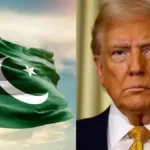



Just days after marathon negotiations ended without a deal, there is fresh hope on the diplomatic front. According to multiple sources, negotiating teams from the United States and Iran are expected to return to Islamabad this week for a second round of peace talks — with Pakistan once again playing the role of mediator, and the clock ticking loudly in the background.
Round One Ended Without a Deal — So Why Is Anyone Optimistic?
The first round of Islamabad talks, held on April 11–12, 2026, was historic by almost any measure. The talks were the most senior engagement between the US and Iran since the 1979 Islamic Revolution. The 300-member US negotiating team was led by Vice President JD Vance alongside special envoys Steve Witkoff and Jared Kushner, while the 70-member Iranian team was led by parliamentary speaker Mohammad Bagher Ghalibaf and Foreign Minister Abbas Araghchi. The talks lasted 21 hours and consisted of three rounds — the first indirect, the second and third direct. Wikipedia
Despite 21 hours of face-to-face engagement, the two sides walked away without an agreement. The main unresolved issues were Iran’s nuclear program and the status of the Strait of Hormuz. Wikipedia
And yet — neither side slammed the door shut on the way out.
Vance told Fox News that Iranian negotiators “moved in our direction… but they didn’t move far enough.” He added: “There really is, I think, a grand deal to be had here, but it’s up to the Iranians, I think, to take the next step.” Time
That single statement — “a grand deal to be had” — may be the most important six words to come out of the entire Islamabad process so far.
Second Round Confirmed? Here’s What Sources Are Saying
Negotiating teams from the US and Iran could return to Islamabad this week, four sources told Reuters on Tuesday, days after the highest-level talks between the two countries since the 1979 Islamic Revolution ended without a breakthrough. A source involved in the talks said a date was not yet decided, but both countries could return as early as the end of this week. “No firm date has been set, with the delegations keeping Friday through Sunday open,” a senior Iranian source said. The Jerusalem Post
Pakistan has been actively working the phones. “We have reached out to Iran and we got a positive response that they will be open to a second round of talks,” a senior Pakistani government official said. An Iranian embassy official in Pakistan confirmed to Reuters that a second round of talks was being discussed. The Jerusalem Post
The White House has not formally confirmed the talks — but has not shut the door either. “Future talks are under discussion but nothing has been scheduled at this time,” a White House official told TIME. President Trump and his administration are open to resuming in-person talks as soon as he believes Iran is prepared to meet his demands. Time
And there was a telling signal from Trump himself. On Monday, US President Donald Trump said Iran had called that morning and that “they’d like to work a deal.” The Jerusalem Post
PM Shahbaz Sharif Flies to Saudi Arabia and Turkey
Pakistan is not waiting around. Prime Minister Shahbaz Sharif has wasted no time launching a diplomatic offensive to ensure the second round actually happens.
PM Sharif is set to visit Saudi Arabia on April 15 for a two-day official trip, at the invitation of Saudi Crown Prince Mohammed bin Salman. The talks are expected to cover the overall regional situation, the future course of US-Iran negotiations, and the possibility of a lasting ceasefire. After concluding his Saudi visit, he will travel to Turkey, where he is expected to participate in the Antalya Diplomacy Forum. Aaj English TV
President Asif Ali Zardari urged Sharif and other officials to remain engaged with the United States, Iran, and other key regional and international powers in order to sustain the peace process and promote regional stability. Zardari praised Pakistan’s role, saying it had “reaffirmed its position as a responsible and pivotal state in the international community.” Türkiye Today
What Needs to Change Before Talks Can Succeed
The first round made progress — but fell apart on two fundamental issues. Going into round two, here is what each side needs:
What the US wants:
The American position is straightforward, even if the bar is high. A fully reopened Strait of Hormuz is a red line for Vance. More broadly, the US is demanding that Iran make a firm commitment not to seek a nuclear weapon and not to seek the tools that would enable it to quickly build one. Time
What Iran wants:
Tehran’s demands are equally firm. Iran’s 5-point counter-proposal includes an end to US-Israeli attacks on Iran and pro-Iranian forces in Lebanon and Iraq, security guarantees to prevent future aggression, war reparations, and international recognition of Iranian sovereignty over the Strait of Hormuz. Wikipedia
Iran’s Foreign Minister Araghchi said the two sides were “inches away” from an agreement when Iran “encountered maximalism, shifting goalposts, and blockade” from the US side. Israel’s escalating attacks on Lebanon — which have killed more than 2,000 people — have also threatened the possibility of a more lasting truce. Time
The economic pressure on both sides:
Extreme volatility in global energy markets is exerting immense pressure on both Washington and Tehran to negotiate. Most major economies are urging a swift resolution to stabilize oil prices, and the ongoing blockade is severely impacting the Iranian domestic economy and global manufacturing supply chains. www.newsorbiter.com
Meanwhile, signs that diplomatic engagement might continue helped calm oil markets, pushing benchmark prices below $100 on Tuesday. Townhall The markets, in other words, are watching every development closely.
The Ceasefire Expires April 21 — Time Is Running Out
The urgency cannot be overstated. The fragile two-week ceasefire brokered by Pakistan on April 8 is set to expire on April 21. That gives both sides less than a week to either reach a framework agreement or agree to extend the truce.
A second meeting with Iranian officials could happen before the two-week ceasefire expires on April 21, or potentially the ceasefire could be extended. Time
Iranian President Masoud Pezeshkian, who discussed the upcoming talks with French President Emmanuel Macron on Tuesday, emphasized that diplomacy is the preferred method for resolving disputes. He asserted that “threats, pressure, and military action will only exacerbate the United States’ self-made problems in the region.” The Jerusalem Post
Both sides appear to understand that letting the ceasefire expire without progress would be catastrophic — for the region, for global energy markets, and for their own populations.
Pakistan’s Diplomatic High-Wire Act
What Pakistan has achieved in the past two weeks is genuinely remarkable. Bringing the US and Iran to the same table — for the most senior direct talks since 1979 — is an accomplishment no other country could have pulled off.
But the harder task is keeping them there.
A source involved in the talks said a proposal had been sent to Washington and Tehran for the delegations to return to Islamabad to resume discussions. An official at the Iranian embassy in Islamabad said: “The coming rounds of talks can come sometime later this week or earlier next week.” HuffPost
Pakistan’s credibility now rests on whether it can bridge the gap between two sides who both claim they want peace, but disagree deeply on what peace should look like.
The world is watching Islamabad again.
Related Reading:
- Pakistan’s Role in Middle East Diplomacy
- US-Iran Ceasefire: Full Story
- What Is the Strait of Hormuz and Why Does It Matter?
External Sources:
- Reuters — US, Iran May Return to Negotiating Table
- TIME — Officials Considering Second Round of US-Iran Talks
- Wikipedia — Islamabad Talks
- Aaj English TV — PM Sharif to Visit Saudi Arabia