


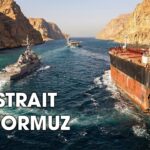

The Strait of Hormuz is just 21 nautical miles wide at its narrowest point. Before February 28, 2026, roughly 3,000 vessels passed through it every month — oil tankers, container ships, LNG carriers, bulk carriers — keeping the world’s energy supply flowing. Today, that number has collapsed to a trickle, and every ship that attempts the crossing is gambling with its hull, its cargo, and the lives of its crew.
Two months into the worst maritime crisis since World War II, the numbers tell a story that is both staggering in scale and terrifying in detail.

The Big Picture: Traffic Down 95%
Ship traffic through the Strait of Hormuz has plummeted by more than 95 percent since the start of the war. According to ship-tracking data from Kpler, 279 ships are known to have transited the strait between February 28 and April 12 — far below the pre-war average of about 100 per day. brecorder
Let that number land. Before the war, 100 ships per day moved through the Strait of Hormuz. In the first six weeks of the crisis, only 279 made the crossing in total — roughly the number that would have passed through in under three days during normal times.
A ceasefire between the US and Iran took effect on April 8. However, only 45 ships have entered or exited the strait since then — showing that even a formal ceasefire has done almost nothing to restore commercial confidence in the waterway. brecorder
Just 154 vessels were recorded crossing in the entire month of March, according to Kpler data. Overall, traffic through the Strait of Hormuz in the last two months has run at about 5 percent of the pre-war average, leading to shortages of refined products, especially in Asia. kitco
What Ships Are Still Moving — And How
The small number of vessels that have dared to cross are not doing so through the normal routes. Iran has fundamentally changed the rules of passage — and the geography of how ships navigate the strait.
The IRGC has published a map showing what it calls “alternative routes for transit” through the Strait of Hormuz that channel traffic through Iran’s territorial waters and past Larak Island, enabling checks by the Iranian navy and port authorities. The Revolutionary Guard marked a so-called “danger zone” in the part of the strait that previously served as the main International Maritime Organization shipping corridor. “The official IMO lane has been almost entirely abandoned.” kitco
In other words, Iran has unilaterally redrawn the shipping lane through one of the world’s most legally important international waterways — requiring all vessels to move into Iranian territorial waters where the IRGC can board, inspect, or stop them at will.
Since the IRGC’s announcement on March 4 of its decision to restrict shipping, Iran’s formal position was that the waterway was actually closed only to enemy countries, namely the US and Israel. Iranian Foreign Minister Abbas Araghchi said in late March: “The Strait of Hormuz, from our perspective, is not completely closed. It is closed only to enemies. There is no reason to allow the ships of our enemies and their allies to pass.” ProPakistani
For a time, Iran operated what was effectively a toll booth. It was reported that Iran was beginning to allow some ships through the strait in exchange for a toll of up to $2 million per ship, as well as allowing passage of some ships owned by China, Russia, India, Iraq, Pakistan, the Philippines, Malaysia, and Thailand. According to Lloyd’s List, at least two vessels transiting the strait paid the toll fee in yuan, China’s currency. businesstoday
22 Ships Attacked — Where and How
According to ship-tracking data from Kpler, 22 ships have been attacked in the Strait of Hormuz since the start of the war. Eight ships were attacked in UAE territorial waters, six in Omani waters, two each in Iraqi and Qatari waters, and one each in Bahraini, Kuwaiti, Saudi, and Iranian waters. brecorder
The attacks have been multi-vector — guns, drones, drone boats, rockets, and sea mines — and have hit vessels from a wide range of nations, not just Western-aligned ones.
Targeting is broader than stated intent: while IRGC messaging frames strikes as focused on Western-linked vessels, incident data shows a wider impact. Sanctioned vessels and non-Western-linked ships — including a Palau-flagged tanker and an India-flagged vessel — have also been hit, indicating that strike patterns are not strictly aligned with declared targeting criteria. TechJuice
Here is a chronological account of the most significant individual ship incidents in the crisis:
February 28 — March 4: The Strait Closes
The crisis began the moment the first US-Israeli strikes hit Tehran. Within hours, the IRGC was broadcasting warnings over VHF radio that “no ship is allowed to pass the Strait of Hormuz.” By March 2, just after midnight, no tankers in the strait broadcast automatic identification system signals, indicating near-zero traffic. Protection and indemnity insurance war risk was removed for March 5, making the economic risk too high for ship owners to use the strait. By March 4, the IRGC claimed complete control — at least eight vessels had already been damaged. TechJuice
March 6–7: Oil Tankers and Tugboats Hit
A large explosion caused by a sea drone struck the oil tanker Sonangol Namibe, anchored near Mubarak Al Kabeer Port in Kuwait — more than 800 kilometres from the strait — representing a significant geographic expansion of the conflict. The attack caused an oil spill that posed an environmental risk. The IRGC said it had hit a US oil tanker. thenews
On March 6, a tugboat dispatched to assist the Safeen Prestige was struck by two missiles and later sank, leaving at least three crew members missing. On March 7, the IRGC claimed that it hit the oil tanker Prima with a drone in the Persian Gulf, and a US oil tanker, the Louis P, with a drone in the Strait of Hormuz. TechJuice
March 11: The Deadliest Day at Sea
A large wave of attacks was carried out on March 11, with at least three vessels sustaining damage. Twenty crew members of the Thailand-flagged Mayuree Naree were rescued by the Royal Navy of Oman after the vessel caught fire, while three others were missing and later confirmed dead. Two oil tankers were attacked by an Iranian drone boat off the Port of Basra, Iraq, setting them on fire and killing at least one crew member. TechJuice
The Mayuree Naree became one of the most widely reported casualties of the crisis. The vessel later went aground on Qeshm Island on March 27 — a haunting end to a ship whose crew had already paid dearly. TechJuice
March 17–19: Gulf States Feel the Reach
On March 17, Kuwait-flagged liquified petroleum tanker Gas Al Ahmadiah was hit by a projectile while anchored east of Fujairah, causing minor damage. The following day, Palau-flagged chemical tanker Parimal was struck east of Khor Fakkan, sparking a fire. Fifteen of its crew were evacuated onto a Cook Islands-flagged tanker, although the captain was reported missing. On March 19, Qatar-flagged offshore vessel Halul 69 was hit by debris off Ras Laffan Industrial City, damaging the bridge window. TechJuice
April 13–18: The US Blockade Begins — and the Crisis Doubles
On April 13, the US military naval blockade of Iran took effect. By April 18, the US stated it had intercepted a total of 23 vessels. Meanwhile, by April 20, Lloyd’s List said at least 26 ships had managed to bypass the US blockade line in both directions. Windows Forum
The same day the blockade was announced, Iran escalated dramatically. Two Indian-flagged ships were targeted by gunfire in the strait and forced to turn back, with the VLCC Sanmar Herald coming under fire from two Iranian gunboats despite receiving prior clearance to pass. A container ship later identified as the CMA CGM Everglade reported damage from a rocket attack off the coast of Oman. The cruise ship Mein Schiff 4 reported a nearby splash while off Oman — the IRGC threatened via VHF radio to fire at and destroy the ship. thenews
April 19: The Touska Seizure — US Marines Take an Iranian Ship
On April 19, the first direct seizure action of the blockade occurred when the 31st Marine Expeditionary Unit and the destroyer USS Spruance seized the Iranian-flagged vessel Touska — almost 900 feet long, en route to Bandar Abbas. It was warned by USS Spruance over a six-hour period before the destroyer fired several rounds from its 5-inch gun into the engine room, disabling it. It was then seized by Marines in the Gulf of Oman. businesstoday
Iran called it piracy. The UN was called upon to intervene. And within hours, Iran’s retaliation came — in the form of armed men rappelling onto commercial vessels in the Strait.
April 22: The Most Dramatic Day Since the War Began
On April 22, an Iranian gunboat attacked the Greek-owned cargo ship Epaminondas off the coast of Oman, despite earlier giving it permission to cross the strait. The attack, consisting of gunfire and rocket-propelled grenades, caused significant damage to the bridge. thenews
The IRGC released footage of its forces boarding and seizing the MSC Epaminondas container ship in the Strait of Hormuz. Footage showed IRGC commandos with faces covered approaching the vessel before opening fire. Liberian-flagged container ship Epaminondas and Panama-flagged MSC-Francesca were seized. Satellite imagery captured 33 IRGC fast-attack craft sailing north of the strait near the Kargan coast in what analysts described as a coordinated show of force. Bloom Pakistan
The IRGC also targeted the Panama-flagged vessel Euphoria. These attacks came just hours after Trump had extended the ceasefire indefinitely. aaj
39 Ships Turned Away by the US Blockade
Since the US blockade began, the numbers on the American side have been growing steadily too.
US Central Command reported that since the blockade came into effect, 39 vessels have been redirected to ensure compliance. The Pentagon said its forces had also “carried out a maritime interdiction and right-of-visit boarding of the sanctioned stateless vessel M/T Majestic X, which was transporting oil from Iran.” Pakistan Connect
US Central Command said the number of ships it had turned around in its naval blockade of Iranian ports had risen to 31 as of April 22. Most of those vessels have been oil tankers, CENTCOM noted. White House Press Secretary Karoline Leavitt insisted the blockade has been “massively effective” and is “inflicting maximum leverage and economic pressure” on Iran. aaj
But the blockade has leaks. The latest shipping data shows that most vessels transiting the Strait of Hormuz in recent days have taken the route designated by Iranian authorities, and about half of them loaded their cargoes at Iranian ports in defiance of the US blockade. kitco
2,000 Ships Stranded — and Mines Nobody Can Find
The aggregate human and economic toll is staggering. About 2,000 ships remain stranded in the Gulf, waiting to be allowed through. Even if the Strait is reopened to all traffic, there will still be obstacles — the United States has said it will take six months to clear mines it believes have been laid by Iran. Arab News PK
According to one report, Iran lost track of mines it planted in the Strait of Hormuz and was therefore unable to fully open the Strait even when it wanted to. The US began a naval operation to clear the Strait from mines — with Pentagon officials informing the House Armed Services Committee that clearing all mines could take up to six months and is unlikely to be completed until the war ends. ProPakistani
Experts say more vessels are leaving the Gulf than entering, indicating that shipping operators are mitigating risks by avoiding the area entirely and reallocating flows. “There are still over 800 vessels in the gulf, but ‘stranded’ isn’t the right term for all of them,” one analyst told CNN. “Many regional vessels, particularly Iranian and Gulf operators, are continuing to operate normally within local routes.” kitco
Iran’s Own Oil Is Still Moving
In one of the most striking ironies of the entire crisis, Iran has managed to keep exporting its own oil even as it has blockaded the strait for everyone else.
Iran’s oil exports through the Strait of Hormuz account for about 80 percent of its total exports. According to Kpler, Iran exported 1.84 million barrels per day of crude oil in March and has shipped 1.71 million barrels per day so far in April, compared with an average of 1.68 million barrels per day in 2025. From March 15 to April 14, it exported 55.22 million barrels of oil. ProPakistani
The primary buyers are China and India — both of which Iran has explicitly allowed through the IRGC’s vetting system. For Beijing and New Delhi, the discounted Iranian crude is economically attractive even amid the uncertainty. For Iran, those exports are keeping the economy from complete collapse despite Trump’s claim that the blockade is costing Tehran $500 million a day.
The Global Economic Fallout
Before the war, oil tankers passing through the Strait accounted for an estimated 15 million barrels per day of crude and other oil product exports — about one-fifth of the world’s oil trade. That has been reduced to a trickle. kitco
The war and strait blockade are continuing to rattle global markets. German airline Lufthansa said that because the price of jet fuel had doubled since the start of the war, it was cutting 20,000 flights through October in an attempt to save fuel. United Airlines has also been impacted, forecasting second-quarter and full-year profits below Wall Street estimates. ProPakistani
Military planners from more than 30 countries are meeting at a Royal Air Force base north of London to put together a multinational mission to safeguard the Strait of Hormuz amid global concerns over oil and energy prices. British defence officials have floated the idea of deploying autonomous mine-hunting systems from motherships sent to the Gulf — but caution that whatever plan they come up with will only take effect after a sustained ceasefire. ProPakistani
The Hormuz Crisis: By the Numbers
| Metric | Figure |
|---|---|
| Pre-war monthly ship traffic | ~3,000 ships/month (~100/day) |
| Ships transited Feb 28 – Apr 12 | 279 ships (6 weeks) |
| Ships transited since ceasefire (Apr 8–12) | 45 ships |
| March 2026 total crossings | 154 ships |
| Traffic as % of pre-war normal | ~5% |
| Ships attacked since Feb 28 | 22 confirmed |
| Ships attacked in UAE waters | 8 |
| Ships attacked in Omani waters | 6 |
| Ships attacked in Iraqi waters | 2 |
| Ships attacked in Qatari waters | 2 |
| Ships attacked in Bahraini/Kuwaiti/Saudi/Iranian waters | 1 each |
| Ships intercepted by US blockade | 39+ vessels |
| Ships bypassing US blockade (both directions) | 26+ (Lloyd’s List) |
| Major ships seized by Iran | MSC Francesca, Epaminondas, Euphoria |
| Major ships seized by US | MV Touska |
| Ships stranded in Gulf | ~2,000 |
| Mine clearance timeline | Up to 6 months (Pentagon) |
| Global oil supply cut | ~20% |
| Oil price increase since war | ~50% |
Stay updated on the Iran-US war, global shipping crisis, and its impact on Pakistan and the world economy at FQF World.
External Sources: Al Jazeera | CNN | NPR | NBC News | Windward AI Maritime Intelligence | International Crisis Group | Lloyd’s List