



The fragile ceasefire brokered by Pakistan between the United States and Iran is under its most severe stress yet. Iran has issued its starkest warning to date — directly threatening that the US naval blockade of its ports is not just an economic pressure campaign, but an act that puts the ceasefire itself at risk of complete collapse.
Major General Ali Abdollahi, the commander of the Khatam al-Anbiya Central Headquarters of the Islamic Revolutionary Guard Corps, issued the warning in explicit terms: “If the aggressor and terrorist US seeks to continue its illegal action of imposing a naval blockade in the region and to create insecurity for Iran’s commercial vessels and oil tankers, this action by the US will constitute a prelude to a violation of the ceasefire.” Business Recorder
Abdollahi went further, warning that “the powerful armed forces of Iran will not allow any exports or imports to continue in the area of the Persian Gulf, the Sea of Oman and the Red Sea” — a threat that, if carried out, would effectively extend Iran’s blockade across all three of the world’s most critical maritime corridors simultaneously. Business Recorder
The situation has reached a point where the word “ceasefire” barely describes what is happening. Both sides are fighting — not with missiles and bombs, but with warships, tanker seizures, mine-laying, and economic strangulation. The question now is whether this maritime war of attrition will break the ceasefire entirely and drag the world back into full-scale military conflict.

How the Naval Blockade Started — and Why It Shocked the World
To understand how the two sides arrived at this dangerous standoff, you have to go back to the Islamabad Talks.
On April 13, 2026, at 10 a.m. ET, the US military naval blockade of Iran took effect, at the direction of Donald Trump and under the command of Admiral Brad Cooper at United States Central Command. The blockade was announced just two days after the Islamabad Talks failed to produce a deal. CENTCOM stated that the blockade would encompass “the entirety of the Iranian coastline,” warning that any vessel “entering or departing the blockaded area without authorization is subject to interception, diversion, and capture.” Windows Forum
US Central Command clarified that the blockade applied only to ships going to and from Iranian ports — ships without departure or arrival destinations in Iranian ports would be free to transit the Strait of Hormuz. However, Iran immediately interpreted the move differently, and the Iranian government said it would view the entry of military vessels near the Strait as a breach of the ceasefire and would respond accordingly. Windows Forum
The international reaction was swift and almost universally negative. China condemned the blockade as “irresponsible and dangerous” and said it “would go against the international community’s interests,” warning that the actions would “exacerbate tensions and undermine the already fragile ceasefire agreement.” Russia condemned the blockade and warned of an “economic earthquake.” Spain’s defence minister stated the blockade “makes no sense.” The United Kingdom, Australia, and the European Union expressed their lack of support for the plan, instead favouring de-escalation and freedom of navigation in the Strait of Hormuz. Windows Forum
The “Dual Blockade” — An Unprecedented Crisis
What has emerged from this situation is something that has no modern precedent: a dual blockade, with each side simultaneously strangling the other’s maritime access and the entire world’s energy supply caught in the middle.
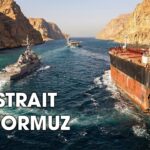
The Strait of Hormuz, through which 20 percent of the world’s oil and liquefied natural gas passed during peacetime, has been largely blocked by Iran since February 28, 2026, when the United States and Israel launched their air war against Iran. The Iranian Revolutionary Guard issued warnings forbidding passage, boarded and attacked merchant ships, and laid sea mines in the Strait. Since April 13, the US has blockaded Iranian ports — creating a “dual blockade.” pakistantoday
The US blockade of Iran differs critically from historical blockades of countries like Venezuela and Cuba: Iran is retaliating by closing the Strait of Hormuz, meaning the longer the US blockade remains in place, the more the global economy suffers — not just Iran. TRADING ECONOMICS
The numbers involved are staggering. About 2,000 ships remain stranded in the Gulf, waiting to be allowed through. And even if the Strait is reopened to all traffic, there will still be obstacles — the United States has said it will take six months to clear mines it believes have been laid by Iran. pakistantoday
The Touska Incident: The Day Everything Escalated
The most dramatic single moment in this naval standoff came on April 19 — and it pushed the situation to the edge.
On April 19, the first direct seizure action of the blockade occurred when the 31st Marine Expeditionary Unit and the destroyer USS Spruance seized the Iranian-flagged vessel Touska. The vessel, almost 900 feet long, was en route to Bandar Abbas. It was warned by USS Spruance over a six-hour period before the destroyer fired several rounds from its gun into the engine room, disabling it. It was then seized by Marines in the Gulf of Oman. TRADING ECONOMICS
Iran’s response came immediately. Iran seized two international cargo ships transiting near the Strait of Hormuz — the MSC-Francesca (Liberia-flagged) and the Epaminondas (Panama-flagged) — describing the US seizure of the Touska as “an illegal act that amounts to piracy.” Iranian Foreign Minister Abbas Araghchi called the US blockade “an act of war.” TRADING ECONOMICS
Iran attacked at least three commercial ships in the Strait of Hormuz, with the British military’s United Kingdom Maritime Trade Operations confirming that one container ship was approached by an IRGC gunboat which “fired upon the vessel, causing heavy damage to the bridge.” No injuries were reported in that incident, but the escalation sent shockwaves through global shipping markets. The Economy
Trump vs. Tehran: A Game of Financial Chicken
While warships manoeuvre in the Gulf, both sides are fighting a parallel economic war — and each is betting the other will crack first.
President Trump posted on Truth Social: “Iran is collapsing financially! They want the Strait of Hormuz opened immediately — Starving for cash! Losing 500 Million Dollars a day. Military and Police complaining that they are not getting paid. SOS!!!” Treasury Secretary Scott Bessent wrote that under Trump’s orders, the US Navy would continue the blockade of Iran’s ports, stating: “In a matter of days, Kharg Island storage will be full and the fragile Iranian oil wells will be shut in. Constraining Iran’s maritime trade directly targets the regime’s primary revenue lifelines.” The Economy
But analysts are sceptical that financial pressure alone will break Tehran. Adam Ereli, a former US ambassador, told Al Jazeera that Iran and the IRGC have “revolutionary fervour” which means they can “survive.” He said: “They can tolerate pain for a lot longer than I think most American decision makers and planners calculate.” brecorder
Analysts note that it remains unclear how tight the blockade actually is, how many ships manage to pass given the considerable amount of floating Iranian oil, and how long Trump can maintain the blockade. One analyst noted that Trump will face a legislative challenge by May 1, when the 60 days he can maintain a foreign offensive without congressional approval come to an end. brecorder
Goldman Sachs Global Institute President Jared Cohen described the standoff as “maritime trench warfare” with the US and Iran each betting economic coercion will force an eventual surrender. “It’s a game of geopolitical chicken between the United States and the Iranians over who’s going to swerve first, and they both have the same theory of change,” he said. Arab governments, he added, think time is on Iran’s side. Arab News
The Hormuz Trap: Iran Opens, Then Closes Again
One of the most telling episodes of this entire crisis was the brief, tantalising moment when Iran actually opened the Strait — and what happened next.
On April 17, Iranian Foreign Minister Abbas Araghchi announced that the Strait of Hormuz was open to all commercial shipping traffic for the duration of a ceasefire in Lebanon. Following the announcement, oil prices dropped sharply, losing 11% in the immediate aftermath. pakistantoday
But the relief lasted less than 24 hours. President Trump posted on Truth Social that the Strait was completely open, but that the US naval blockade would remain until negotiations with Iran had concluded. The decision to continue the blockade would result in Iran cancelling the reopening of the Strait of Hormuz, with video footage showing ships turning away from the waterway. On April 18, Iran said it had closed the Strait again in response to the US refusing to lift its naval blockade. pakistantoday
This exchange reveals the fundamental deadlock at the heart of the crisis: the US wants the Strait open before lifting the blockade; Iran wants the blockade lifted before fully opening the Strait. Both sides are conditioning their concession on the other side moving first — and neither is blinking.
Iran’s Hardliners Are Driving the Narrative at Home
Inside Iran, the diplomatic track is facing an increasingly hostile domestic environment — and this makes any deal harder to reach.
Iranian authorities have maintained a defiant approach and have said their supporters, who have taken to the streets at night in a show of strength, will not be happy if major concessions are given on uranium enrichment and the Strait of Hormuz. Messages from Iran’s hardline-controlled state television and many members of parliament have been adamantly against negotiations with Washington, pushing the narrative that Iran has the upper hand after surviving 40 days of war with military superpowers. Business Recorder
Speaking to supporters in southwest Tehran, parliament’s deputy speaker Ali Nikzad said Iran considers control over the Strait of Hormuz a sovereign and legal matter — framing any concession on Hormuz access as a national sovereignty issue rather than a negotiating chip. Business Recorder
Iran’s chief negotiator and parliamentary speaker Mohammad Bagher Ghalibaf stated that the ceasefire “only makes sense if it is not violated by the maritime blockade.” Iranian President Masoud Pezeshkian said Iran welcomes dialogue but that “breach of commitments, blockade and threats are the main obstacles to genuine negotiations.” The Economy
The internal Iranian position is clear: the civilian diplomatic track, represented by Araghchi and Pezeshkian, wants to negotiate — but the IRGC, which controls the actual military assets, is setting conditions that make negotiation nearly impossible.
What Does a Resolution Even Look Like?
The path to ending this crisis requires resolving several deeply entangled issues simultaneously — and Goldman Sachs’s Jared Cohen doesn’t think a clean resolution is coming.
Cohen predicted that unless Iran’s regime collapses, the Strait of Hormuz will never be open quite the way it was before the war. “Since the US and Israel launched their war in late February, Tehran has discovered how much leverage it can wield over the global economy by closing off the Strait of Hormuz. As a result, Iran will not let go. You may have traffic flowing through, but the Iranians will likely maintain partial or unilateral control,” he said. Arab News
His assessment of the most likely outcome: “My guess is the North Star on this, and where it goes is: you go from a sloppy ceasefire to a strong, enduring ceasefire and a sloppy peace. And a sloppy peace is basically a bunch of half solutions on all the big issues.” Arab News
The five major issues under discussion remain: the status of Iran’s nuclear enrichment program, its ballistic missile program, the reopening of the Strait of Hormuz, sanctions relief and frozen assets, and a long-term peace framework. Vice President Vance has stated the US core goal is an “affirmative commitment” from Iran that it will not seek a nuclear weapon and will not seek the tools to quickly achieve one. Profit by Pakistan Today
What This Means for Pakistan — and the Rest of the World
For Pakistan, which has staked enormous diplomatic capital on the Islamabad Process, the naval blockade crisis is a direct threat to everything the country has built.
The tremors from the effective closure of the Strait of Hormuz — the narrow artery linking oil and gas producers in the Gulf to the open seas — are being felt across the world, stoking fears of a global recession. While Tehran was previously allowing ships from countries it deemed “friendly,” including Pakistan, to pass the Strait, it has now closed it to all foreign-flagged ships until the US lifts its naval blockade. Arab News PK
Pakistan’s economy is already paying the price — in record fuel prices, rising inflation, and the SBP’s first rate hike in three years. Every day the dual blockade continues is another day Pakistani consumers pay more for petrol, cooking gas, and every imported good that travels by sea.
Iran’s First Vice President Mohammad Reza Aref summed up Iran’s position bluntly: “One cannot restrict Iran’s oil exports while expecting free security for others. The choice is clear: either a free oil market for all, or the risk of significant costs for everyone. Stability in global fuel prices depends on a guaranteed and lasting end to the economic and military pressure against Iran and its allies.” brecorder
That statement is as much a message to Pakistan, India, China, and every energy-importing developing economy as it is to Washington. The world’s most important oil chokepoint is now a weapon in a geopolitical standoff — and until that standoff is resolved, everyone else is collateral damage.
The Blockade Crisis: Key Facts at a Glance
| Detail | Status (as of April 29, 2026) |
|---|---|
| US Naval Blockade Start Date | April 13, 2026 |
| Scope of Blockade | All ships to/from Iranian ports |
| Ships Intercepted by US | 23+ vessels |
| Ships Bypassing Blockade | 26+ (Lloyd’s List) |
| Iranian Vessel Seized | MV Touska — April 19 |
| Foreign Ships Seized by Iran | MSC Francesca, Epaminondas |
| Hormuz Open | Briefly April 17, closed again April 18 |
| Ships Stranded in Gulf | ~2,000 |
| Mine Clearance Timeline | 6 months (Pentagon estimate) |
| Cost to Iran (Trump’s claim) | $500 million/day |
| Oil Price Drop (April 17 reopening) | -11% immediately |
| Ceasefire Status | Technically extended, practically violated by both |
Stay updated on the Iran-US war, Pakistan’s mediation efforts, and global economic impact at FQF World.
External Sources: Al Jazeera | NPR | Fortune | UK House of Commons Library | Wikipedia — 2026 US Naval Blockade of Iran