

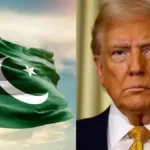



Pakistan is refusing to give up. Even as US-Iran ceasefire talks have stalled, tempers have flared, and both sides have traded accusations, Islamabad has continued to do what it does best in this crisis — keep the diplomatic channel alive. The latest chapter in Pakistan’s extraordinary mediation story saw Field Marshal Syed Asim Munir and Interior Minister Mohsin Naqvi make a direct trip to Tehran, walking into the lion’s den of one of the most complex geopolitical stand-offs of our time.
Field Marshal Syed Asim Munir, COAS and CDF, along with Interior Minister Mohsin Naqvi and a formal delegation, concluded a three-day official visit to the Islamic Republic of Iran. During the visit, the Field Marshal called on the President of Iran, Dr. Masoud Pezeshkian, and held separate meetings with Speaker of the National Assembly Mohammad Bagher Ghalibaf, Foreign Minister Abbas Araghchi, and Commander of Khatam ul Anbiya Headquarters Major General Ali Abdollahi. Mettis Global
The discussions were focused on bringing sustainable peace to the region, with particular emphasis on the evolving regional security environment, ongoing diplomatic engagements, and collaborative measures aimed at promoting enduring peace and stability. The Field Marshal underscored the need for dialogue, de-escalation, and peaceful resolution of outstanding issues through sustained diplomatic engagements. Mettis Global

How Pakistan Became the World’s Most Important Mediator
To understand why Field Marshal Munir’s visit to Tehran matters so much, you need to step back and see the full picture of what Pakistan has built over the past few weeks — arguably the most consequential diplomatic role the country has ever played on the world stage.
The Islamabad Talks were held in Islamabad on April 11 and 12, 2026. Aimed at stabilizing the 2026 Iran war ceasefire and negotiating a potential resolution to the conflict, the talks were moderated by Pakistan, which played a central role in brokering the ceasefire and facilitating the engagement. The 300-member US negotiating team was led by Vice President JD Vance, alongside special envoys Steve Witkoff and Jared Kushner. The Iranian team was led by parliamentary speaker Mohammad Bagher Ghalibaf, alongside Foreign Minister Abbas Araghchi. The Pakistani mediating team was led by Prime Minister Shehbaz Sharif, Field Marshal Asim Munir, and Deputy Prime Minister and Foreign Minister Ishaq Dar. GuruFocus
The talks lasted 21 hours between April 11 and 12, consisting of three rounds — with the first being indirect and the second and third being direct. GuruFocus
Twenty-one hours of negotiations. Three rounds of talks, some direct, some through Pakistani intermediaries. This was the highest-level engagement between the United States and Iran since 1979 — and it happened in Islamabad, on Pakistan’s soil, under Pakistani facilitation.
Before the talks, Pakistan delivered a “5-point initiative” for peace on March 31, calling for an immediate end to all hostilities and the allowance of humanitarian aid into the region. Pakistani officials had earlier delivered a “15-point proposal” from the US to Iran on March 25, detailing a ceasefire plan. GuruFocus
The Islamabad Talks: What Was Agreed, What Wasn’t
The April 11–12 summit produced no final agreement — but it produced something arguably more important: a proof of concept that the two sides could sit in the same room and talk.
The talks follow extensive damage to Iran’s military infrastructure and defences as well as regional energy production. Issues under discussion included freedom of navigation through the Strait of Hormuz, Iran’s nuclear and ballistic program, reconstruction and sanctions, and a long-term peace agreement. Pakistan Stock Exchange
The main unresolved issues reportedly included Iran’s nuclear program and the status of the Strait of Hormuz. While the US side insisted on a phased relief linked to compliance, Iran demanded comprehensive lifting of sanctions and the release of frozen assets — including $6 billion — as a precondition to any meaningful deal. GuruFocus
The US President said “most points were agreed to, but the only point that really matters, nuclear, was not,” describing Iran as “unyielding” on the issue. Iran’s Foreign Minister said an agreement was “just inches away” but criticised “maximalist demands” from the US negotiators. Pakistan Stock Exchange
Both sides went home without signing anything — but both sides also made clear that the channel was not closed.
The Ceasefire That Keeps Getting Extended
One of the most significant achievements of Pakistan’s mediation was securing the ceasefire itself — and then keeping it alive as tensions continued to flare.
On April 8, 2026, the United States and Iran agreed to a two-week ceasefire in the 2026 Iran war, mediated by Pakistan. Iran had initially rejected the draft proposal for a 45-day two-phased ceasefire framework, instead proposing its own 10-point plan for a peace agreement. TradingView
That ceasefire was fragile from the start. Since its declaration, the ceasefire has been violated by both sides. But it has held just enough to keep diplomacy alive. TradingView
On April 21, President Trump said he extended the Iran truce to allow time for an Iranian proposal to be submitted, at Pakistan’s request. On April 22, US officials said that Trump had given Iran three to five days to engage in negotiations and resolve alleged internal divisions before resuming attacks. TradingView
Iran’s position on the Strait of Hormuz remains the most combustible issue. According to one report, Iran lost track of mines it had planted in the Strait of Hormuz and was therefore unable to fully open it. The US began a naval operation to clear the Strait from mines. TradingView
Field Marshal Munir’s Role: A Man Both Sides Trust
What makes Field Marshal Asim Munir’s personal involvement so remarkable is the trust he has built on both sides of this conflict — something that very few people in the world can claim right now.
Field Marshal Asim Munir visited Iran’s Khatam al-Anbiya Central Headquarters in Tehran as Pakistan continues mediation between Iran and the US following the two-week ceasefire. He was received by Khatam al-Anbiya Central Headquarters Commander Major General Ali Abdollahi upon arrival at the military facility. Trade Chronicle
United States President Donald Trump has publicly acknowledged the army chief’s role in the mediation process and expressed support for continued engagement through Pakistan. Trade Chronicle
Trump’s praise was explicit. When asked about returning to Islamabad for further talks, Trump told the media: “It’s more likely, you know why? Because the Field Marshal is doing a great job. He’s fantastic, and therefore it’s more likely that we go back there. Why should we go to some country that has nothing to do with it?” GuruFocus
The Iranian side has been equally appreciative. Iranian Foreign Minister Abbas Araghchi personally received the Pakistani delegation at the airport and expressed gratitude, saying he was “delighted” to welcome the Field Marshal on his visit and thanking Pakistan for its gracious hosting of dialogue — describing it as a reflection of “our deep and great bilateral relationship.” Meezan Bank
A senior Iranian source told Reuters that Field Marshal Munir was heading to Iran “to narrow gaps” between Iran and the United States. Meezan Bank
Iran’s Position: Talks Only Through Pakistan, and Nowhere Else
One of the most striking diplomatic developments of this entire saga is that Iran has explicitly told the world where it is willing to negotiate — and the answer is unambiguous.
Iranian Ambassador to Pakistan Reza Moghadam stated clearly that Tehran would “do talks in Pakistan and nowhere else, because we trust Pakistan.” pakistantoday
That is an extraordinary statement of confidence in Islamabad’s neutrality and good faith. For a country that has been deeply suspicious of international mediators and has historically resisted outside engagement on its core strategic issues, Iran’s willingness to come to Islamabad — and only Islamabad — speaks volumes about the relationship Pakistan has built with Tehran over decades.
Analysts say Pakistan’s value as a mediator lies in the rare credibility it holds with both sides. Pakistan is seen as having sufficient weight with Washington due to its historical security partnership and alliance, while simultaneously maintaining warm ties with Tehran rooted in shared cultural, religious, and geographic connections. pakistantoday
The Second Round: Still Being Negotiated, But Not Dead
The weeks following the first Islamabad talks have been a diplomatic rollercoaster — and Field Marshal Munir’s Tehran visit was Pakistan’s most recent attempt to get the second round back on track.
Pakistani ministers are trying to facilitate a second round of talks between US and Iranian officials, after lengthy discussions in early April failed to resolve the thorniest diplomatic hurdles between the warring parties. TradingView
Iranian Foreign Minister Abbas Araghchi landed in Islamabad on April 25 for a flurry of meetings with Pakistan’s top leadership, including Prime Minister Shehbaz Sharif and Field Marshal Asim Munir. The White House had said a US delegation would travel to Islamabad that weekend, but Iranian media denied reports that Araghchi would directly negotiate with Washington during his trip. Simply Wall St
Then came one of the most dramatic moments of the entire diplomatic saga. President Trump called off his envoys’ trip to Islamabad, with the White House directing reporters to his comments on Fox News: “I’ve told my people a little while ago, they were getting ready to leave, and I said, ‘Nope, you’re not making an 18-hour flight to go there. We have all the cards. They can call us anytime they want, but you’re not going to be making any more 18-hour flights to sit around talking about nothing.'” Simply Wall St
The warring parties have so far failed to start a second round of talks in Islamabad, laying bare key sticking points to a definitive resolution to the fighting. However, the warring parties have so far failed to formally begin a second round of negotiations, revealing key sticking points that remain unresolved. TradingView
Iran’s public position has remained cautious but not completely closed. Iran’s Foreign Ministry spokesman said there are no plans for a meeting between Iranian and US negotiators in Pakistan — but that Iran’s observations would be conveyed to Pakistan, and that Araghchi was in Pakistan to meet with Pakistani officials “in concert with their ongoing mediation and good offices for ending the American-imposed war of aggression.” Mettis Global
What Pakistan’s Mediation Means for the Country Itself
Beyond the geopolitics, this entire episode has significant domestic implications for Pakistan — a country that is simultaneously dealing with rising fuel prices, a rate hike, and the economic fallout of the very same Middle East conflict it is trying to resolve diplomatically.
Pakistan’s credibility as a mediator directly affects its own economic interests. The closure of the Strait of Hormuz has been devastating for Pakistan — pushing up oil and gas prices, disrupting trade routes, and contributing to the inflation that prompted the SBP to raise interest rates this week.
Pakistan’s Prime Minister Shehbaz Sharif spoke with Iranian President Pezeshkian in what analysts described as capping an intensive week of Pakistani diplomacy — underscoring that the country’s engagement with Iran operates simultaneously at the political, military, and diplomatic levels. pakistantoday
Russia’s Foreign Minister Sergey Lavrov called his Pakistani counterpart Ishaq Dar and said he “highly appreciated” Islamabad’s mediation efforts between Iran and the US, voicing Moscow’s “readiness to contribute” — an indication of how seriously the major powers are now treating Pakistan’s diplomatic role. PitchBook
The Road Ahead: Cautious Hope, But No Breakthrough Yet
Pakistani officials expressed cautious optimism, saying the process was moving in a positive direction while stressing that a final agreement would require sustained engagement and compromise. Unlike the first round, any second round of talks could run for several days, with the aim of agreeing on a framework for broader negotiations in the coming weeks and months. pakistantoday
Analysts caution against viewing the first round as a failure. “I wouldn’t characterise the first round as having failed — that assumes expectations of resolving the most difficult issues early on, which is unlikely in talks of this nature where the issues are so complex.” pakistantoday
The key variables remain unchanged: whether Iran will agree to constraints on its nuclear program, whether the US will ease its naval blockade of the Strait of Hormuz, and whether both sides can find a face-saving formula that allows each to claim partial victory at home.
Field Marshal Munir’s visit to Tehran — his second in under two weeks — shows that Pakistan is not going to give up on this process. The message from Islamabad to both Washington and Tehran is consistent and clear: the Islamabad process is still alive, Pakistan’s door remains open, and the alternative to diplomacy is a resumption of a war that is already costing the region — and Pakistan — enormously.
Pakistan’s Iran-US Mediation: Key Timeline
| Date | Event |
|---|---|
| March 31, 2026 | Pakistan delivers 5-point peace initiative |
| April 8, 2026 | Two-week ceasefire brokered by Pakistan |
| April 11–12, 2026 | Historic Islamabad Talks — 21 hours, no final deal |
| April 13, 2026 | US imposes naval blockade of Strait of Hormuz |
| April 15–18, 2026 | Field Marshal Munir + Mohsin Naqvi 3-day visit to Tehran |
| April 21, 2026 | Trump extends ceasefire at Pakistan’s request |
| April 24–25, 2026 | Iranian FM Araghchi visits Islamabad again |
| April 25, 2026 | Trump cancels US delegation’s planned trip to Islamabad |
| April 28, 2026 | Diplomatic efforts continue — second round still sought |
Stay updated on Pakistan’s diplomacy, economy, and regional affairs at FQF World.
External Sources: ISPR Pakistan | Dawn | Al Jazeera | CNN World | UK House of Commons Library | The Express Tribune