



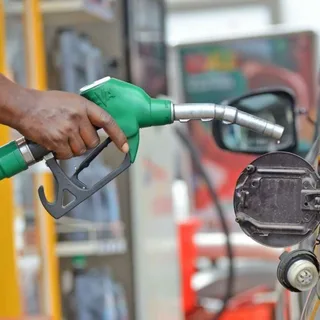
Petrol price increase Pakistan April 2026 has once again shocked consumers, as the government raised petrol and diesel prices by Rs. 26.77 per litre, pushing fuel costs close to Rs. 400.Just when Pakistani consumers were hoping for some breathing room, the government has delivered yet another blow at the fuel pump. The federal government has announced an increase in the prices of both petrol and high-speed diesel by Rs. 26.77 per litre. The revised rates took effect from April 25, 2026. brecorder
With this increase, the price of High-Speed Diesel (HSD) has risen to Rs. 380.19 per litre, up from Rs. 353.42, while petrol now costs Rs. 393.35 per litre, compared to Rs. 366.58 previously. International Monetary Fund
For millions of Pakistanis — daily commuters, delivery riders, truck drivers, farmers, and small business owners — this is not just a number on a notification. It is another hit to an already stretched household budget, and the timing could not be worse.
What the Government Said
The government did not mince words about why this increase was unavoidable. In a statement, Petroleum Minister Ali Pervaiz Malik said oil prices had risen once again due to regional tensions, adding: “Due to the mounting pressure from rising oil prices and agreements with global partners, the government is compelled to pass on the burden of price hikes to the public.” International Monetary Fund
The Petroleum Minister noted that regional tensions have once again pushed up global oil prices, adding pressure on the domestic market, and that due to pricing pressures and existing agreements with international partners, the government is being forced to take difficult decisions. Wikipedia
The official notification was issued by the Ministry of Energy (Petroleum Division), and the revised prices came into effect from midnight of April 25.
This Is Not the First Hike — Not Even Close
Today’s increase is painful, but to understand the full scale of how bad things have gotten, you have to look at the trajectory since the Middle East crisis began.
Pakistan had already increased petrol and diesel prices by Rs. 55 per litre on March 6 and announced unprecedented austerity measures on March 9 in the first steps to deal with the situation. Then came the biggest announcement: Petroleum Minister Ali Pervaiz Malik announced that the price of petrol was being raised to Rs. 458.4 per litre and that of HSD to Rs. 520.35 per litre — a single increase of Rs. 137.24 per litre on petrol and Rs. 184.49 per litre on diesel. International Monetary Fund
To put that in perspective — crude oil and diesel prices had reached historic highs, crossing the $250 per barrel mark at their peak, according to the Petroleum Minister. International Monetary Fund
Prices have since come down somewhat from those record levels, which is why today’s rate of Rs. 393.35 per litre for petrol is lower than the April 3 peak — but it still represents a staggering increase compared to where things stood just two months ago.
The Real Reason: A Global Energy Crisis Like No Other
Pakistan is not alone in suffering. The entire world is dealing with the consequences of what energy experts are calling the worst oil supply shock in modern history.
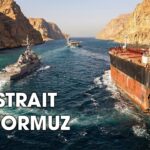
The 2026 Iran war fuel crisis is an ongoing worldwide crisis caused by the war between Iran and the US-Israel coalition. The closure of the Strait of Hormuz — through which around 20% of the world’s oil trade passes — and attacks on energy infrastructure in Iran and several Gulf Cooperation Council countries led to a massive disruption in global oil supplies. dawn
The numbers from the International Energy Agency (IEA) are staggering. Global oil supply plummeted by 10.1 million barrels per day to 97 million barrels per day in March, with continued attacks on energy infrastructure in the Middle East and ongoing restrictions to tanker movements through the Strait of Hormuz, leading to the largest supply disruption in history. Windows Forum
Brent crude surged more than 55% since the Iran war began, hitting nearly $120 a barrel at its peak, amid fears of disrupted oil flows through the Strait of Hormuz. March marked one of the largest monthly oil price jumps on record, with Brent gaining 51% as Gulf output fell and exports stalled. geo
Pakistan is particularly vulnerable in this scenario. Pakistan relies on imports for more than 80 percent of its oil needs. Between July 2025 and February 2026, its oil imports totalled $10.71 billion. Business Recorder When global oil prices double, a country that imports 80% of its fuel has virtually no buffer.
Energy analyst Amer Zafar Durrani, a former World Bank official and CEO of advisory firm Reenergia, pointed out that even austerity measures leave the main driver of fuel demand largely unaddressed: “Transport dominates petroleum consumption. Roughly 80 percent of petroleum products are used in transport, meaning the country’s oil dependence is fundamentally a mobility problem.” Business Recorder
What the Government Has Done to Soften the Blow
To be fair, the government has not simply stood by. When the first round of historic price hikes came in early April, Finance Minister Muhammad Aurangzeb announced a set of targeted relief measures alongside the increase.
The government announced that a targeted subsidy of Rs. 100 per litre would be given for two-wheelers, with a cap of 20 litres per month for three months. Small farmers would receive a one-time Rs. 1,500 per acre subsidy given agriculture’s role in food security. For HSD-run inter-city and goods transport, Rs. 100 per litre subsidy would be provided and reviewed monthly. Additionally, Rs. 70,000 direct support would be given for trucks carrying approximately 80–85 percent of food items. International Monetary Fund
Prime Minister Shehbaz Sharif also said the federal government had spent Rs. 129 billion since March 1 to “protect the people,” while arrangements for alternative energy supply lines also had to be made due to the disruption of traffic in the Strait of Hormuz. International Monetary Fund
These are meaningful measures — but with fuel costs rising at this pace, targeted subsidies can only go so far.
The Human Cost at Ground Level
The real impact of these price hikes is felt in the streets, the markets, and the homes of ordinary Pakistanis — not in government press conferences.
This latest increase directly hits monthly running costs, especially for daily commuters, ride-hailing drivers, delivery riders, and people who rely on their vehicles for work. With petrol moving close to the Rs. 400 per litre mark, fuel economy is no longer just a nice-to-have feature — it is becoming a survival tool. brecorder
Higher petrol prices have already pushed up transport fares and the cost of groceries, adding pressure on household budgets. Muhammad Zubair, a plumber in Islamabad whose family lives in Muzaffarabad, said the fuel crisis has directly affected his income: “I remain mobile for work on my motorbike, but with fuel getting so expensive, it just eats into my savings.” Business Recorder
Diesel is the backbone of Pakistan’s freight and agriculture sectors, which means every increase in diesel prices ripples across the entire supply chain — vegetables, wheat, sugar, medicine, building materials — everything that moves on a truck becomes more expensive almost immediately.
Is There Any Hope of Relief?
The only real solution to Pakistan’s fuel crisis is a resolution of the global energy shock — specifically, a reopening of the Strait of Hormuz. There are tentative signs of diplomatic movement. US special envoy Steve Witkoff and Jared Kushner have traveled to Islamabad for direct talks with Iranian counterparts. Oil prices were mixed as markets awaited the outcome, with Brent crude at $105.33 per barrel. Business Recorder
Even with a ceasefire, analysts warn that prices will not snap back to where they were. Commodity Context founder Rory Johnston said that any reopening of the strait would likely trigger an immediate drop of between $10 and $20 in crude prices due to speculative positioning, but that relief would be temporary. Supply chain bottlenecks, infrastructure damage and lingering production outages would keep the market tight, anchoring Brent in the $80 to $90 range rather than a full return to pre-crisis levels. geo
The IEA has noted that resuming flows through the Strait of Hormuz remains the single most important variable in easing the pressure on energy supplies, prices, and the global economy. Profit by Pakistan Today
Until that happens, Pakistani consumers have little choice but to absorb the pain — and brace themselves for the possibility that more difficult decisions may still lie ahead.
Updated Fuel Prices in Pakistan (April 25, 2026)
| Fuel Type | Previous Price | New Price | Increase |
|---|---|---|---|
| Petrol (MS) | Rs. 366.58/litre | Rs. 393.35/litre | Rs. 26.77 |
| High-Speed Diesel (HSD) | Rs. 353.42/litre | Rs. 380.19/litre | Rs. 26.77 |
Prices effective midnight, April 25, 2026.
Stay updated on Pakistan’s economy, fuel prices, and financial news at FQF World.
External Sources: Business Recorder | ARY News | Dawn | Al Jazeera | IEA Oil Market Report April 2026