





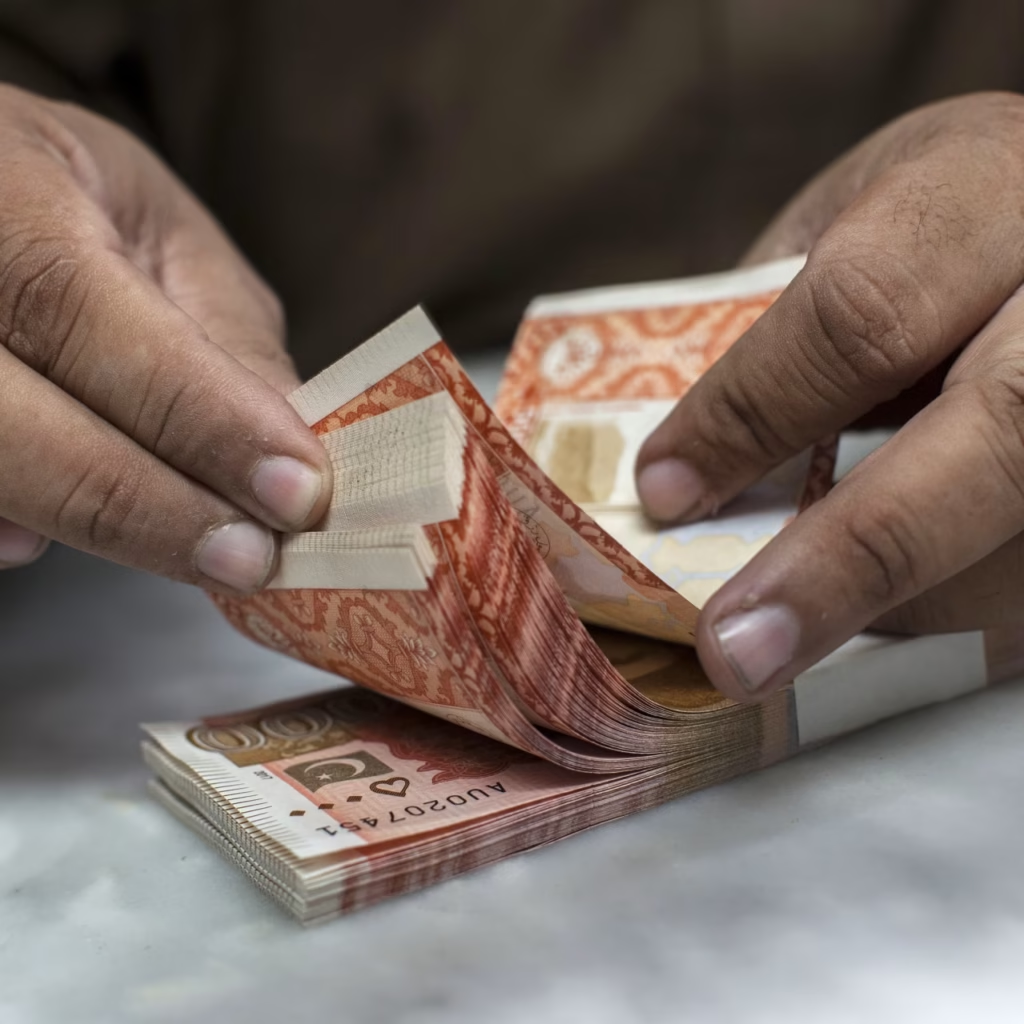
Pakistani Rupee vs Euro Pound Dollar showed strong recovery as the PKR gained against Euro, Pound, and US Dollar on April 23, 2026.
Pakistan’s currency markets ended Thursday on a positive note, with the Pakistani Rupee (PKR) delivering one of its stronger performances in recent weeks — gaining ground against the British Pound and Euro while continuing its remarkable unbroken streak against the US Dollar.
The Pakistani Rupee closed in green against the US Dollar for the 146th consecutive day on Thursday. The PKR closed at 278.86 after gaining one paisa against the US Dollar. Meanwhile, it gained Rs. 1.18 against the British Pound (GBP) and Rs. 1.39 against the Euro (EUR). It also gained 27 paisas against the Australian Dollar (AUD) and 31 paisas against the Canadian Dollar (CAD). ProPakistani
For a currency that spent years under severe pressure, this kind of consistent performance is a remarkable story — and today’s gains against the Euro and Pound make it even more notable.
Today’s Exchange Rates at a Glance (April 23, 2026)
Here’s where major currencies stand against the Pakistani Rupee in the open market today:
The US Dollar is being bought at Rs. 279.15 and sold at Rs. 280.00. The Euro (EUR) is trading at Rs. 327.62 for buying and Rs. 332.27 for selling. The British Pound Sterling (GBP) stands at Rs. 376.15 for buying and Rs. 383.36 for selling. The UAE Dirham (AED) is available at Rs. 75.90/76.75, and the Saudi Riyal (SAR) is at Rs. 74.45/75.45. Pakistan Observer
What’s particularly interesting about today’s session is that the rupee didn’t just hold steady — it actively pushed back against the Euro and Pound, which have both been surging globally due to the continued weakness of the US dollar.
Why the US Dollar Is Falling — And Why Pakistan Benefits
To understand today’s rupee gains, you need to zoom out and look at the bigger picture. The US dollar has been under pressure globally for several months now, and that trend is directly helping the Pakistani Rupee find firmer footing against European currencies.
The US Dollar Index (DXY), which measures the dollar’s value against a basket of major currencies, fell nearly 10% through 2025, with even steeper declines against certain individual currencies — depreciating 13.5% against the Euro, 13.9% against the Swiss Franc, and 6.4% against the Yen. Morningstar
The reasons behind this decline are structural. Much of the weakness reflects cyclical and policy-driven forces — slowing US growth, narrowing rate differentials, persistent fiscal deficits, and elevated inflation. External factors such as shifting global capital flows, renewed hedging of dollar assets, and waning confidence in US macroeconomic policy have also added pressure. Morningstar
And analysts don’t see this changing anytime soon. ING Research’s baseline view for the dollar is a bearish one for the remainder of 2026, expecting two Federal Reserve rate cuts this year, with a slowdown in US growth in the second half coinciding with upbeat eurozone figures, lifting EUR/USD further. ING THINK
What this means for Pakistan is straightforward: when the Euro and Pound rise against the Dollar globally, the Rupee — which has been holding steady against the Dollar — automatically gets cheaper relative to European currencies. But today’s session flipped that dynamic, with the Rupee actually gaining ground against both the Euro and Pound, suggesting some genuine underlying strength in the local currency.
The Rupee’s 146-Day Winning Streak Against the Dollar
The headline number that deserves attention is that 146-day consecutive closing streak in green against the US Dollar. This isn’t a small feat for Pakistan’s currency, which hit record lows not too long ago.
The Pakistani Rupee continued its upward trajectory against the US Dollar in Tuesday’s interbank session, with the local currency strengthening to close at PKR 278.90 per USD. During intraday trading, the rupee touched a high of 278.95 and a low of 278.90 against the greenback. In the open market, exchange companies quoted the dollar at PKR 278.90 for buying and PKR 279.95 for selling. Mettis Global
The 12-month range tells the full story of the rupee’s recovery — the USD/PKR pair hit a high of 285.29 on July 21, 2025, and a low of 277.64 on January 25, 2026, Exchange Rates UK meaning the rupee has held remarkably close to its strongest levels of the past year throughout this winning run.
What’s Holding the Rupee Up?
Several factors are working in Pakistan’s favor right now, and analysts point to a combination of domestic stabilization and global tailwinds.
Remittances remain a key pillar. Exchange companies handled nearly $5 billion in inflows, while total worker remittances stood at around $38 billion during fiscal year 2024–25. Bloom Pakistan The SBP has also taken new steps to make remittances even more attractive. The SBP has allowed exchange firms to lock PKR/USD rates in advance, aiming to improve remittance inflows and provide stability for overseas inflows. Bloom Pakistan
Foreign reserves are improving. The SBP has been building reserves steadily, with the central bank targeting $18 billion by June 2026. Higher reserves give the SBP more firepower to defend the rupee against volatility and reduce the risk of sudden devaluation shocks.
A weak global Dollar is a natural tailwind. USD hedging is expected to remain elevated due to lower front-end US interest rates, and a slowdown in US growth is expected to coincide with upbeat Eurozone figures. ING THINK For Pakistan, this creates a favorable environment where a stable rupee-dollar rate automatically translates into relative rupee strength against European currencies.
IMF program discipline is paying off. The government and SBP have maintained the fiscal and monetary discipline required under the IMF program, which has improved investor confidence, reduced the country risk premium, and kept speculative dollar demand in check.
What This Means for Importers, Exporters & Overseas Pakistanis
These currency moves aren’t just numbers on a screen — they have real consequences for real people.
For importers, a stronger rupee against European currencies is welcome news. Pakistan imports significant machinery, chemicals, and manufactured goods from Europe. Even a Rs. 1-2 improvement in the Euro rate can save businesses meaningful amounts on large-volume purchases.
For overseas Pakistanis sending money from the UK or Europe, however, today’s rupee gains work the other way — they’ll get slightly fewer rupees per pound or euro sent home. That said, with the pound still trading above Rs. 376 and the euro above Rs. 327, remittances from Europe remain highly lucrative compared to historical norms.
For exporters and the broader economy, a stable-to-strengthening rupee signals confidence. It reduces uncertainty for businesses that need to plan ahead, and it keeps imported inflation from adding to the already elevated domestic price pressures Pakistan is navigating right now.
The Road Ahead
The rupee’s performance today is encouraging, but Pakistan isn’t out of the woods. Analysts believe the USD to PKR rate will stay between Rs. 278.80 and Rs. 280.50 for the rest of April unless any significant global news appears. First Capital
The bigger test will come from the SBP’s MPC meeting on April 27. If the central bank decides to raise interest rates in response to rising inflation and Middle East-driven energy price pressures, it could further support the rupee by attracting capital inflows and signaling monetary credibility. On the other hand, if global oil prices spike again or remittance flows soften, the current stability could come under pressure.
For now, though, Pakistan’s currency story is one of quiet resilience — and today’s gains against the Euro and Pound are a small but meaningful sign that the worst may genuinely be behind us.
Stay up to date with Pakistan’s currency markets and economy at FQF World.
External Sources: State Bank of Pakistan | Morningstar Currency Outlook | ING Think Economics | ProPakistani