



The fragile ceasefire between the United States and Iran is now on life support. With the truce set to expire Tuesday, Iran has publicly declared it has no plans to send negotiators to Islamabad for a second round of talks — even as the US delegation is already on its way. The trigger for this latest breakdown: a dramatic naval confrontation in the Gulf of Oman that saw American forces fire on and seize an Iranian cargo ship, and Iran close the Strait of Hormuz again in response. Fifty days into a war that has killed thousands, the next 24 hours may be the most consequential of all.
Iran’s Official Position: We’re Not Coming
Iran’s rejection of the second round of talks is now on the record — stated clearly, publicly, and with no ambiguity.
Iran has signalled that it has no plans to send negotiators to Islamabad for a new round of talks with the United States, threatening Pakistan’s plans for multiday negotiations between the warring nations less than 48 hours before a fragile ceasefire is set to expire. Iranian Ministry of Foreign Affairs spokesman Esmaeil Baghaei said on Monday that Washington had “violated the ceasefire from the beginning of its implementation,” citing the US naval blockade of the Strait of Hormuz since April 13, and the overnight capture of an Iranian container ship by the US military as breaches of the truce as well as international law. Al Jazeera
According to IRNA, the naval blockade had “so far prevented progress in negotiations” and “no clear prospect for productive negotiations is foreseen” under current conditions. Iran dismissed US statements about talks as “a media game,” aimed at pressuring Iran through a “blame game.” Al Jazeera
Iran’s Foreign Ministry spokesperson confirmed the government has no plans regarding a new round of talks after the United States seized an Iranian-flagged cargo ship in the Strait of Hormuz. Al Jazeera
Yet even as Iran’s official spokespeople were saying all of this publicly, the situation was more fluid behind closed doors.
The Contradictions: Iranian Sources Hint at Tuesday Arrival
The gap between Iran’s public statements and its private signals has been a defining feature of this entire diplomatic episode — and Monday was no different.
Despite Iran’s public rejection, Iranian sources told CNN a delegation is expected to arrive in Pakistan on Tuesday. The US envoy team, led by Vice President JD Vance alongside special envoys Steve Witkoff and Jared Kushner, is heading to Islamabad despite President Trump initially creating confusion by suggesting Vance would not attend due to security concerns. CNN
Ebrahim Azizi, head of the Iranian Parliament’s National Security Committee, told Al Jazeera that Iran will likely send a team to negotiate “today or tomorrow.” Pakistan has reportedly been preparing for an Iranian delegation to arrive in Islamabad. Time
This contradiction — Iran’s Foreign Ministry saying no, while Iranian parliamentary officials hint at yes — reflects the intense internal debate within Tehran about whether to engage or escalate. The hardliners are pushing back hard. The pragmatists are still at the table, at least privately.
What Triggered the Breakdown: The Touska Seizure
To understand why Iran walked away from talks — at least officially — you have to understand what happened on Sunday in the Gulf of Oman.
After a tumultuous weekend, US President Donald Trump said American and Iranian negotiators would resume talks in Islamabad on Monday. But Iranian Foreign Ministry spokesperson Esmaeil Baqaei said there was “no plan for a second round of negotiations with the US for now.” The two-week ceasefire is set to expire on Tuesday. CNBC
The immediate cause of the rupture was a dramatic naval action. A US Navy guided missile destroyer fired on and disabled an Iranian-flagged cargo ship in the Gulf of Oman before Marines boarded and seized the vessel. The USS Spruance intercepted the Touska after the Iranian ship refused to comply with US warnings over a six-hour period. American forces fired several rounds from the destroyer’s 5-inch MK 45 gun into the Touska’s engine room to disable its propulsion. US Marines from the 31st Marine Expeditionary Unit later boarded the non-compliant vessel. CNBC
The Touska was headed from China to the Iranian port of Bandar Abbas when it was intercepted. Iran called it piracy. The US called it legitimate blockade enforcement. And the Strait of Hormuz closed again.
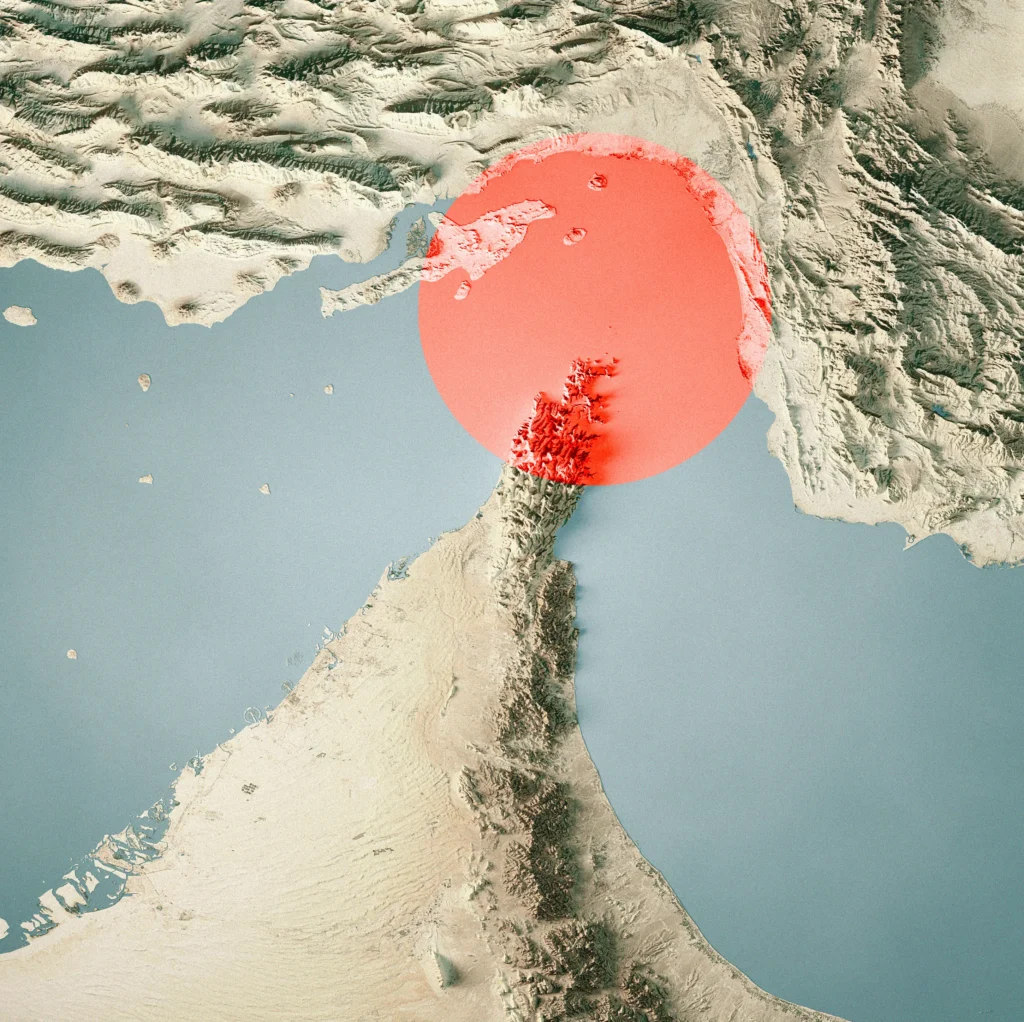
The Strait of Hormuz: Open One Day, Closed the Next
The whiplash in the strait of hormuz status over the past 72 hours captures perfectly how fragile the entire situation has become.
On Friday, Iran declared the Strait of Hormuz fully open to commercial traffic, sending crude prices tumbling more than 10%. By Saturday, hopes for a fully opened artery quickly unravelled as Tehran reclaimed control of the choke point, after Trump refused to end the US naval blockade of Iranian ports. After a brief pickup in transit attempts on Saturday, shipping traffic in the Gulf stalled once again after the closer of strait of hormuz, with vessels coming under fire mid-passage and being forced to withdraw. CNBC
Oil prices climbed Sunday as Iran once again blocked the passage of most ships through the Strait of Hormuz. Brent crude, the international benchmark, was up about 7% to $96.88. No tankers passed through the Strait of Hormuz on Sunday, according to tracking data. CNN
US gas prices reached a national average of $4.05 a gallon on Sunday. Energy Secretary Chris Wright warned they may not return to under $3 a gallon until “next year.” CNN
The global economic cost of this standoff is staggering. The economic costs of the conflict are mounting as the Strait of Hormuz has been effectively closed for nearly two months. Analysts estimate supply disruptions of around 13 million barrels of crude, condensates, and natural gas liquids per day — a cumulative effect that has already breached half a billion barrels. CNBC
Pakistan Is Still Trying: Multi-Day Talks on the Table
Despite the diplomatic chaos, Pakistan has not given up. Islamabad is visibly preparing for talks to happen — and hoping that Iran’s private signals override its public statements.
Pakistani officials expressed cautious optimism, saying the process was moving in a positive direction while stressing that a final agreement would require sustained engagement and compromise. Unlike the first round, talks could run for several days, with the aim of agreeing on a framework for broader negotiations in the coming weeks and months. Al Jazeera
Billboards and hoardings were mounted on lamp posts across Islamabad as Pakistan prepared to host the US and Iran for a possible second phase of peace talks. Pakistan army chief Field Marshal Asim Munir had travelled to Tehran earlier in the week carrying a new message from Washington. Al Jazeera
The goal at this stage, Pakistani officials say, is not a final agreement — it is a ceasefire extension. Even a few more days would be enough to prevent a return to open warfare and keep the diplomatic track alive.
Trump’s Dual Strategy: Talks and Threats, Simultaneously
President Trump’s approach to this crisis has been characteristically unpredictable — offering peace negotiations at the exact same moment as issuing some of his most aggressive threats yet.
Trump wrote on Truth Social: “We’re offering a very fair and reasonable DEAL, and I hope they take it because, if they don’t, the United States is going to knock out every single Power Plant, and every single Bridge, in Iran. NO MORE MR. NICE GUY!” NPR
Trump announced the Touska seizure on social media simultaneously with the announcement that talks might resume — a deliberate combination of threat and offer that is a signature of his negotiating style, but one that carries serious escalation risk when the other party is Iran with a domestic audience watching. European Business Magazine
The Clock Expires Tuesday: What Happens If There Is No Deal?
As of Monday April 20, 2026, the two-week ceasefire between the United States and Iran expires tomorrow, Tuesday April 21, with no deal in place and no confirmed second round of talks. The war has killed more than 4,000 people across the Middle East. Oil markets, European equities, and Gulf sovereign bond markets are all pricing the next 48 hours with extreme caution. European Business Magazine
The International Monetary Fund warned that global growth will inevitably take a hit even if the ceasefire holds, citing uncertainty over the Strait of Hormuz as a persistent drag, pushing up energy costs and inflation. Even if a deal is reached, experts warn that it could take months to claw back the supply lost over recent weeks of closures, keeping oil prices elevated for longer. CNBC
The next 24 hours will answer one of the defining questions of 2026: whether Iran’s private signals matter more than its public statements, whether Pakistan’s mediation can survive yet another round of escalation, and whether a war that has already killed thousands and shaken the global economy slides back into open conflict — or finds a way, however imperfect, to step back from the edge.
External Sources:
- Al Jazeera — Iran Says No Talks With US For Now
- Al Jazeera — Iran War Live: Tehran Will Skip Talks
- CNBC — Resumption of Hostilities: Seized Ship, Vessel Attacks Push Ceasefire Toward Brink
- TIME — US Seizes Iranian Cargo Ship Amid Peace Talk Standoff
- European Business Magazine — Iran-US Ceasefire Expires Tomorrow