


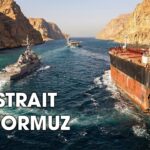

The Strait of Hormuz — already the most dangerous waterway in the world right now — became even more dangerous on Sunday as a series of escalating moves between the United States and Iran brought the two sides closer to renewed open conflict than at any point since the fragile ceasefire was declared on April 8. The US seized an Iranian cargo ship. Iran fired on commercial vessels. And Tehran vowed direct retaliation. With the ceasefire expiring Tuesday, the world is watching a high-stakes confrontation in real time.
The Spark: US Destroys Engine Room, Seizes Iranian Cargo Ship
The immediate trigger for Sunday’s dangerous escalation was an extraordinary military action by the United States Navy in the Gulf of Oman — one that no one anticipated when the day began.
Trump wrote on Truth Social that the USS Spruance intercepted the Iranian ship Touska in the Gulf of Oman. The US Navy “gave them fair warning to stop. The Iran crew refused to listen, so our Navy ship stopped them right in their tracks by blowing a hole in the engine room,” Trump said. He added that US Marines have custody of the vessel and that it is “under US Treasury Sanctions because of their prior history of illegal activity.” NPR
US Central Command confirmed the details: the Arleigh Burke-class guided missile destroyer USS Spruance (DDG-111) intercepted the Touska as it transited the north Arabian Sea at 17 knots, headed to the Iranian port of Bandar Abbas. American forces issued multiple warnings and informed the Iranian-flagged vessel it was in violation of the US blockade. After the Touska’s crew failed to comply with repeated warnings over a six-hour period, Spruance directed the vessel to evacuate its engine room, then fired several rounds from the destroyer’s 5-inch MK 45 Gun to disable the ship’s propulsion. US Marines from the 31st Marine Expeditionary Unit later boarded the non-compliant vessel. The Daily Caller
The Touska — described as nearly 900 feet long and weighing almost as much as an aircraft carrier — had been coming from China and was heading home to Iran. It ignored every warning. The result was the most dramatic enforcement action of the US naval blockade since it began on April 13.
Iran’s Response: Ceasefire Violation — and a Vow of Retaliation
Tehran did not wait long to respond. Within hours, Iran’s military leadership declared the seizure a direct violation of the ceasefire agreement, and promised consequences.
Early on Monday, Iran’s top joint military command said the US had violated the ceasefire reached earlier this month by firing at an Iranian commercial ship that was heading from China to Iran. Al Jazeera
Iran vowed retaliation after President Trump said US forces had seized the Iranian-flagged cargo ship near the Strait of Hormuz that tried to pass the US naval blockade. Al Jazeera
Iran’s position is straightforward: the ceasefire agreement, as it understands it, covers Iranian commercial vessels as well as military assets. The US shooting at and boarding an Iranian merchant ship — even one under Treasury sanctions — is, in Tehran’s view, an act of war against a civilian vessel during a ceasefire. Washington disagrees, arguing that sanctioned ships operating for Iranian state entities are legitimate blockade targets.
Both sides are right by their own interpretations. That is precisely what makes this so dangerous.
What Happened in the Strait: Iran Fires on Ships, Closes the Waterway Again
The Touska incident did not occur in isolation. The hours surrounding it saw a cascade of hostile actions in and around the Strait of Hormuz that painted a picture of a situation rapidly spinning out of control.
Iran briefly reopened the Strait of Hormuz — then closed it again. After briefly reopening the waterway, Iran said it would restrict ships from passing through as long as the US continues its blockade of Iranian ports. Iran’s chief negotiator and parliamentary speaker Mohammed Bagher Ghalibaf was unequivocal: “It is impossible for others to pass through the Strait of Hormuz while we cannot.” NPR
The seizure came after Iran fired upon commercial vessels attempting to transit the Strait of Hormuz earlier on Sunday. CNBC
India was directly caught in the crossfire. India’s foreign ministry summoned Iran’s ambassador in New Delhi after what it said was a shooting incident involving two Indian-flagged vessels in the Strait of Hormuz. India urged Iran to allow Indian ships to resume safe passage across the strait as soon as possible. The UK’s Maritime Trade Operations Centre also received a report that two Iranian Revolutionary Guard gunboats fired on a tanker. NPR
More than 20,000 seafarers remain stranded on hundreds of ships in the Gulf since the war began in late February — and Sunday’s events made their situation more precarious, not less.
The Context: Why the Strait Is the Whole War
To understand why every incident in the Strait of Hormuz carries such enormous weight, consider what is at stake economically.
Until the US–Israeli war against Iran, the Strait of Hormuz was open and about 25% of the world’s seaborne oil trade and 20% of the world’s liquefied natural gas passed through it. The restriction of shipments by more than 90% raised energy and agricultural input costs worldwide. Roughly 20% of the world’s oil and natural gas normally passes through the strait, and the disruptions caused Brent crude prices to jump sharply, with analysts warning they could reach $100 per barrel or higher if disruptions persist. Wikipedia
Trump praised the US blockade of the Strait of Hormuz, claiming it was costing Iran “$500 million a day” while the United States “loses nothing.” NPR
Iran’s counter-argument — expressed by Ghalibaf — is equally logical: if Iran cannot use the strait, no one else can either. It is a leverage standoff that is costing the global economy billions every week it continues.
Trump’s Warning: “No More Mr. Nice Guy”
As Iran vowed retaliation and the situation around the strait deteriorated, President Trump escalated his own rhetoric dramatically.
Trump wrote: “We’re offering a very fair and reasonable DEAL, and I hope they take it because, if they don’t, the United States is going to knock out every single Power Plant, and every single Bridge, in Iran. NO MORE MR. NICE GUY!” NPR
The language is unmistakably escalatory. Threatening to destroy every power plant and bridge in a country of 90 million people, during a ceasefire, goes well beyond standard diplomatic pressure. It is the kind of statement that makes further military action look not just possible, but likely — unless talks resume before the ceasefire expires Tuesday.
The Clock, the Talks, and What Comes Next
All of this is happening as the two-week ceasefire ticks toward its Tuesday, April 21 expiry date. US officials confirmed that a delegation headed to Islamabad on Monday for a second round of talks — but Iran has rejected those talks, at least publicly, citing Washington’s “excessive demands” and the ongoing blockade.
The IRGC Navy has said that any military vessel approaching the strait would be considered a ceasefire violation and would meet a “severe response.” Iran has reportedly also laid sea mines in the strait, and according to one report, Iran lost track of where some of those mines are — meaning it is unable to fully reopen the waterway even if it wanted to. Wikipedia
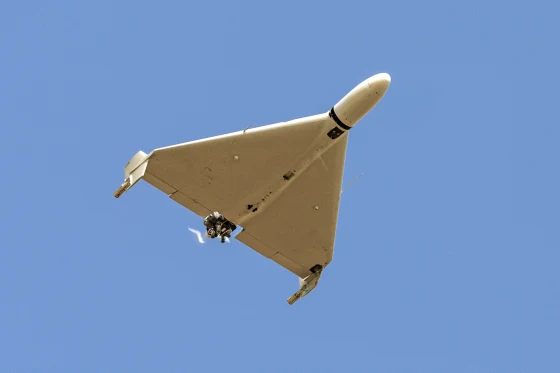
The situation on the ground — Iran firing on ships, the US seizing Iranian vessels, both sides accusing each other of ceasefire violations, drone attacks in both directions, and a diplomatic negotiation collapsing before it starts — is as volatile as any moment in this conflict since the war began on February 28.
Pakistan’s mediators are still working every channel available. Whether they can hold things together for even 48 more hours — enough for talks to begin — may determine whether this crisis resolves through diplomacy or explodes back into full-scale war.
External Sources: