

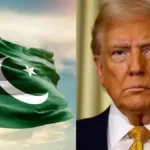



Pakistan’s PM Shahbaz Sharif has confirmed that the fragile ceasefire between the United States and Iran remains in place, even as both sides struggle to bridge deep gaps that prevented a final peace agreement during marathon talks held in Islamabad earlier this month.
The Ceasefire That Almost Didn’t Happen
To understand where things stand today, you have to go back to the edge of catastrophe.
On February 28, 2026, Israel and the United States launched an air war against Iran, killing its Supreme Leader and many other officials, destroying a large number of military and government targets, and killing civilians. Iran responded with missile and drone strikes against Israel, U.S. bases, and U.S.-allied countries in the Middle East — and by closing the Strait of Hormuz, disrupting global trade. Wikipedia
The conflict dragged on for weeks. Then, with just 90 minutes left before Trump’s deadline to launch a massive new assault on Iranian infrastructure, Pakistan stepped in at the last moment.
Trump said he agreed to the ceasefire “based on conversations with Prime Minister Shehbaz Sharif and Field Marshal Asim Munir, of Pakistan,” adding that they had “requested that I hold off the destructive force being sent tonight to Iran.” Al Jazeera
Sharif announced on social media: “With the greatest humility, I am pleased to announce that the Islamic Republic of Iran and the United States of America, along with their allies, have agreed to an immediate ceasefire everywhere including Lebanon and elsewhere, EFFECTIVE IMMEDIATELY.” X
It was Pakistan’s most significant diplomatic achievement in years — and the world exhaled.
The Islamabad Talks: Historic, But Incomplete
With the ceasefire secured, both sides agreed to come to Islamabad for formal negotiations. The capital woke up on Saturday to lockdown: roads were sealed, checkpoints appeared, and more than 10,000 security personnel were deployed ahead of ceasefire talks between the United States and Iran. Al Jazeera
The talks were genuinely historic. For the first time in 47 years, the US and Iran held the highest level of direct talks in Islamabad, hosted and brokered by Pakistan. Both delegations negotiated face-to-face for 21 hours. The Nation
But the talks ended without a deal.
US Vice President JD Vance, who led the US delegation, said Tehran refused to accept Washington’s terms after 21 hours of negotiations. “The bad news is that we have not reached an agreement, and I think that’s bad news for Iran much more than it’s bad news for the United States of America,” Vance told reporters. Al Jazeera
Iran told a different story. Iranian Foreign Minister Abbas Araghchi said his country had engaged in “good faith,” only to face shifting demands. “When just inches away from an Islamabad MoU, we encountered maximalism, shifting goalposts, and blockade,” he wrote on X. Al Jazeera
What Are the Main Sticking Points?
The gap between Washington and Tehran is wide — but not necessarily unbridgeable. Three core issues continue to block a deal:
1. The Nuclear Question
This is the biggest obstacle. Vance said the US needs “an affirmative commitment that they will not seek a nuclear weapon, and they will not seek the tools that would enable them to quickly achieve a nuclear weapon.” He described this as “the core goal of the president of the United States.” PBS
Iran has shown little willingness to surrender its entire nuclear program. Al Jazeera’s Osama Bin Javaid reported from Islamabad that what the US is essentially asking Iran is to give up its right to any nuclear programme, even for medical purposes — a demand Iran sees as a “sea of mistrust.” Al Jazeera
2. The Strait of Hormuz
Iran’s grip on the Strait of Hormuz has largely cut off the Persian Gulf and its oil and gas exports from the global economy, sending energy prices soaring. Around a fifth of the world’s traded oil had typically passed through on over 100 ships a day — only 12 have been recorded transiting since the ceasefire. PBS
Tehran sees control of the strait as its primary leverage in negotiations and has shown no rush to permanently relinquish it.
3. Lebanon and the Regional War Scope
Tehran insisted the ceasefire included Lebanon, citing Pakistani PM Shehbaz Sharif’s ceasefire announcement on X, which unequivocally stated this was the case. Al Jazeera However, Israeli Prime Minister Benjamin Netanyahu said the ceasefire would not extend to its fighting with the Lebanese armed group Hezbollah, or Israel’s invasion of southern Lebanon — comments that seemed to directly contradict Sharif’s claims. Al Jazeera
Iran’s delegation also told state television it had presented “red lines,” including compensation for damage caused by U.S.-Israeli strikes that launcheSharif: “The peace agreement Remains Staying secure”en assets. PBS
PM Shahbaz Sharif: “The Ceasefire Is Still Holding”
Despite the breakdown in formal talks, Prime Minister Sharif has been careful to frame the situation as a pause — not a failure.
“The ceasefire is still holding and, as I speak, full efforts are underway to resolve the outstanding issues,” PM Sharif told Pakistan’s cabinet on Monday, April 13, 2026. The Nation
He described the Islamabad talks as a “historic moment,” saying they provided a rare opportunity to transform an active conflict into a chance for lasting peace. The Peninsula Qatar
Sharif also drew parallels to other famous peace processes, noting that the Oslo Accord, the Good Friday Agreement, and the end of Sudan’s internal fighting all took years of effort before yielding results.
Now, Pakistan is pushing for a second round. Sharif is set to visit Saudi Arabia and Turkey as his bid to moderate a second round of peace talks between the US and Iran gathers momentum. Trump has also said talks could resume in Pakistan within the next two days. Al Jazeera
Can Pakistan Pull It Off Again?
Pakistan’s role in this crisis has drawn global praise — and significant scrutiny. Both Trump and Iranian officials praised Sharif and Chief of Army Staff Field Marshal Asim Munir for their efforts to secure the ceasefire and host the talks in Islamabad. Analysts say that suggests both sides remain open to further Pakistan-brokered negotiations. Al Jazeera
Sahar Baloch, a Germany-based scholar of Iran, noted that “the real test of credibility is not preventing breakdowns, but remaining relevant after them.” Al Jazeera
Both the American president and Iranian representatives praised Sharif along with Army Chief Field Marshal Asim Munir for their efforts to secure the ceasefire and host the talks in Islamabad. Dar has already spoken separately with the Egyptian and Turkish foreign ministers, who in turn spoke to US Middle East envoy Steve Witkoff and Iranian Foreign Minister Abbas Araghchi. The Week
A regional source with knowledge of the negotiations told Axios: “We are not in a complete deadlock. The door is not closeThere is a pressing need in this context that cannot be exaggerated.” The Week
The Clock Is Ticking
There is urgency here that cannot be overstated. A pressing urgency exists here which cannot be emphasized enough. The Week
UN Secretary-General António Guterres, who met with Pakistan’s Deputy Prime Minister this week, said it was “highly probable” that ceasefire talks would restart, adding: “I think it would be unrealistic to expect such a complex problem, long-lasting problem, could be resolved in the first session of a negotiation. We need negotiations to go on, and we need a ceasefire to persist as negotiations go on.” Al Jazeera
The cost of failure is enormous. The war has already left a deep scar on the region. It has killed at least 3,000 people in Iran, more than 2,000 in Lebanon, and caused lasting damage to infrastructure across half a dozen Middle Eastern countries.
Pakistan’s Moment on the World Stage
Whatever happens next, Pakistan has already done something remarkable.
It convinced two countries with nearly five decades of mutual hostility — countries that had been actively at war — to sit across from each other in a single room in Islamabad.
Pakistan managed what others couldn’t through a combination of geography, religion, and regional relationships. It holds close ties with Gulf states including Saudi Arabia and Qatar, giving it unique credibility with both sides.
The fragile ceasefire that expires on April 21 is the only thing standing between diplomacy and a return to full-scale war.
For now, Prime Minister Shahbaz Sharif is working the phones, flying to Riyadh and Ankara, and doing everything in his power to make sure that deadline is not the moment the world falls back into conflict.